


Are slat walls good for acoustics?
Slat walls can have both positive and negative effects on acoustics, depending on their design, materials, and installation. Here are some considerations regarding the acoustic properties of slat walls:
Positive Aspects:
Diffusion:
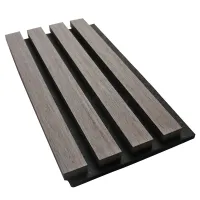
Slat walls with irregularly spaced or angled slats can contribute to sound diffusion. This means they scatter sound waves rather than reflecting them directly back, which can help reduce echoes and improve overall acoustic quality.
Material Selection:
The choice of materials for slat walls can impact their acoustic performance. Some materials, like wood, can absorb sound to a certain extent, helping to reduce reverberation and enhance acoustic comfort in a space.
Aesthetics and Design:
Slat walls, when strategically designed, can enhance the aesthetics of a space while providing acoustic benefits. By incorporating design elements that break up large flat surfaces, such as irregular slat spacing or varying slat angles, the acoustic performance can be improved.
Considerations:
Absorption vs. Reflection:
The acoustic performance of slat walls depends on whether they are designed to absorb or reflect sound. Perforated slats, acoustic panels behind the slats, or porous materials can enhance absorption, while solid slats may contribute more to sound reflection.
Recommended article:18mm Structural Hardwood Plywood Sheet (8' x 4')
TJI I-Joists
I Joist selection for large span
How Does Stainless Steel Coil for Automotive Applications Work?
What Are the Key Questions to Ask When Ordering a Thickness 15mils 100ft Roll of Anti-Corrosion Inner Wrap Tape?
Lustre Prepainted Steel Coil: The Ultimate Guide to Durable and Stylish Finishes
Understanding 19 Wire Pc Strand Applications and Benefits
Spacing and Arrangement:
The spacing between slats and their arrangement can impact how sound interacts with the wall. Irregular spacing or staggering the slats can contribute to better diffusion and absorption.
Combination with Absorptive Materials:
Slat walls are often more effective when combined with additional acoustic treatments, such as absorptive materials strategically placed within the space. This holistic approach can address both reflection and absorption.
Negative Aspects:
Sound Transmission:
Solid slat walls may transmit sound through them, especially if they are thin or lack sufficient acoustic insulation. This can lead to sound leakage between rooms.
Limited Absorption:
Some slat wall configurations may have limited capacity for sound absorption, especially if they consist of non-porous materials. In such cases, additional acoustic treatments may be necessary to achieve desired results.
In conclusion, slat walls can be designed to contribute positively to acoustics by incorporating features that enhance diffusion and absorption. However, for optimal acoustic performance, it's often beneficial to combine slat walls with other acoustic treatments tailored to the specific needs of the space. Working with acoustic design professionals can help ensure that the chosen materials and configurations align with the desired acoustic goals.
Exploring the Benefits of Using Soundproof Aluminum Foil Butyl Tape for Cars
Key Questions to Ask When Ordering Galvanized Steel Coil 0.16mm
Which Mechanical Protection Outer Tape is best?
Key Questions to Ask When Ordering Galvanized Steel Coil 5.00mm: A Comprehensive Guide
A guide to pipe clamps - Zhiang
Ultimate Guide: Everything You Need to Know About SL72 Mesh
Revolutionize Your Trenches with Drawn Wire Mesh - The Ultimate Solution?
Related Articles
-
Choosing a Metal Stamping Provider

-
How to install FibaFuse drywall tape?

-
5 Key Benefits of Prototype Metal Stamping in Tech

-
Questions You Should Know about black annealed baling wire

280
0
0
-
SD Reinforcement Mesh vs. Traditional Reinforcement: Key Differences Explained
-
The Ultimate Guide to Choosing Luminous Translucent Resin bord for Lamp Post

-
How Does a252 steel mesh Work?

254
0
0
-
What are the disadvantages of PVC panel ceiling?
507
0
0
Comments
0